
This piece is composed of acrylic paint, UV reactive paint, floetrol, artist’s breastmilk, ginger beer, bayberry oil, isopropyl alcohol and gloss varnish.
Sometimes, well quite frequently I get really bizarre ideas for my art. I’ve had to train myself to trust my gut and the inspiration that comes to me from my heart, imagination and that which is unexplainable and divinely given. I’ve learned to go more with, well why not?! Let’s try and find out! The acrylic pouring style of painting originated in the 1930’s and was originally called accidental painting, an unexpected merger of art and physics.
Art and Physics Converge: Accidental Painting
When artist David Alfaro Siqueiros first discovered his “accidental painting” technique in the 1930s, the simplicity of the process coupled with its elaborate results riveted him. Siqueiros simply poured different color paints onto a wooden panel, allowing the different colors to spread, coalesce, and infiltrate one another.
“When he discovered this process, he wrote a very long letter to his girlfriend,” said Sandra Zetina, an art historian at the National Autonomous University of Mexico. “He wrote very beautifully about this.”
Siqueiros fell in love with the aesthetics, but the underlying science sustained his enthusiasm; he even invited scientists to his workshop to explain the physics behind his painting techniques. The scientists, however, had trouble understanding what Siqueiros wanted from them, according to Zetina.
Fast forward to the 21st century. Zetina, like Siqueiros, wanted to understand how these beautiful paintings formed. She needed an expert in fluid dynamics, and she eventually found just the right physicist at her same university — Roberto Zenit. Together, they’ve unraveled this scientific art form. Except From https://www.physicscentral.com/explore/plus/accidental-painting.cfm
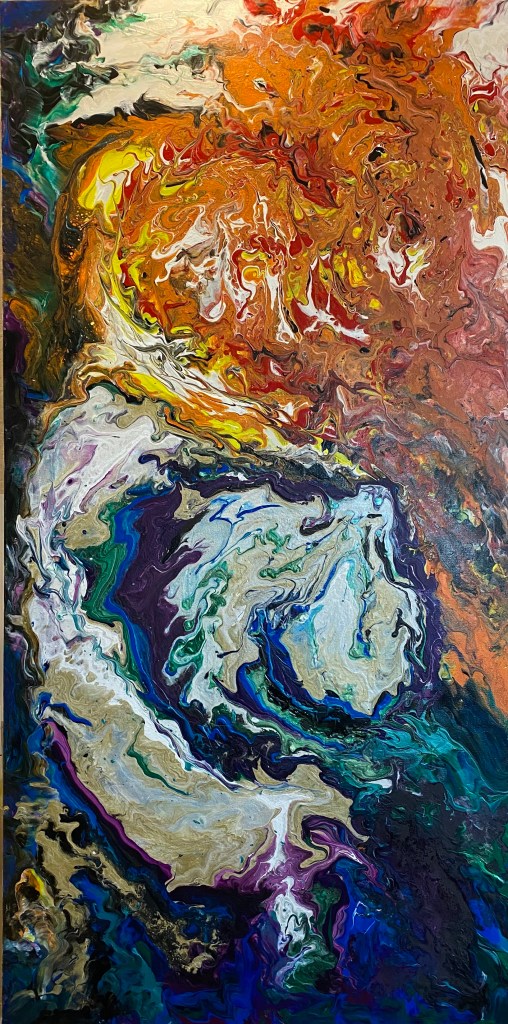
Prints available by request ! email maezystardust@icloud.com
 infinite stardust